


Solar energy is rapidly evolving, especially in the realm of electricity generation. Concentrated Solar Power (CSP) systems are leading this change by harnessing sunlight and transforming it into usable energy. This article explores the intricacies of solar steam generators, shedding light on how CSP technology enables electricity production.
The Basics of Concentrated Solar Power (CSP)
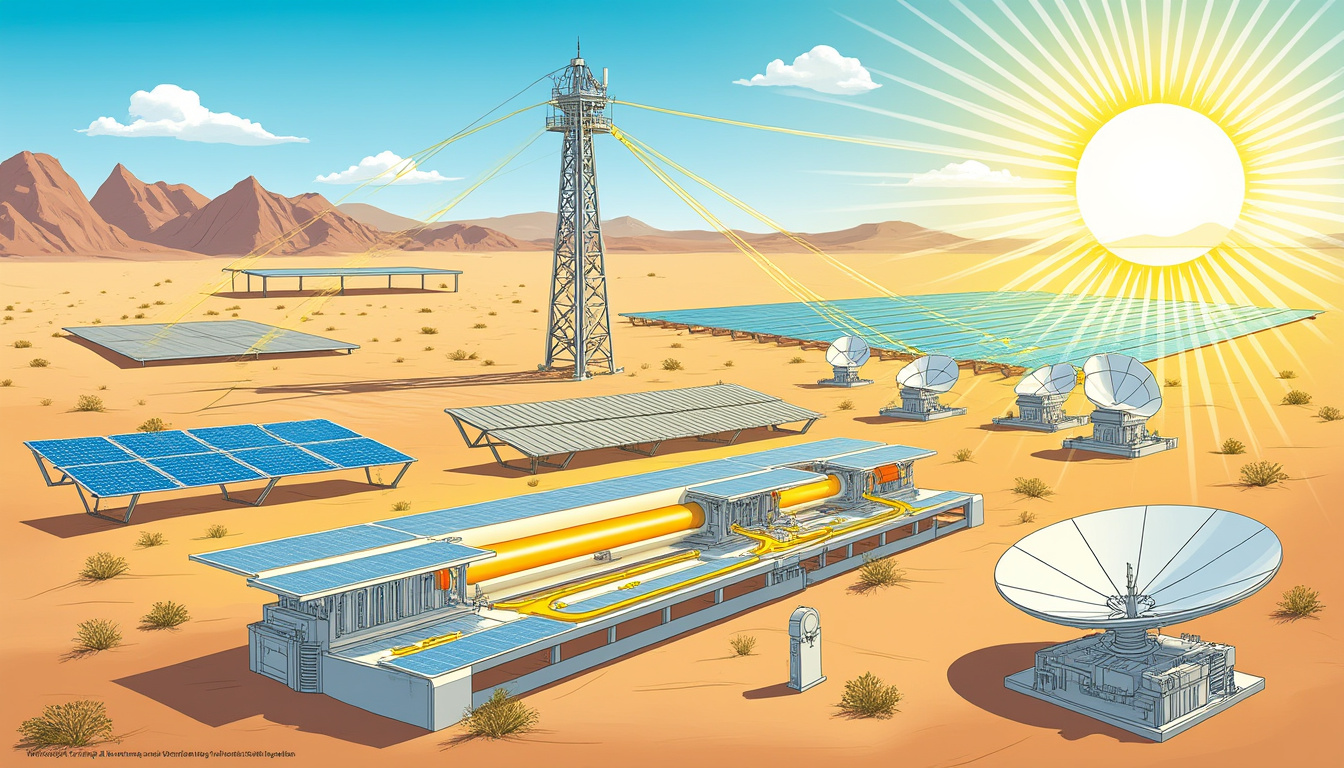
Concentrated Solar Power (CSP) is a renewable energy technology that uses mirrors or lenses to concentrate sunlight onto a small area, generating heat that can then be used to produce electricity. The fundamental principle behind CSP is relatively simple yet highly effective. By focusing solar energy onto a receiver, high temperatures are generated, which can effectively convert a heat transfer fluid (HTF) into steam. This steam drives a turbine connected to an electrical generator, thereby producing electricity.
There are several types of CSP systems, each utilizing different methods to concentrate solar energy. The primary types of CSP designs include:
- Parabolic Troughs: This design features linear parabolic mirrors that track the sun and focus sunlight onto a receiver tube filled with a working fluid, typically a heat transfer oil.
- Power Towers: Also known as heliostat systems, these utilize an array of mirrors that concentrate sunlight onto a central tower, where the heat is collected and converted into steam.
- Linear Fresnel Reflectors: Similar to parabolic troughs but using flat mirrors that reflect sunlight onto a receiver tube located above them.
- Dish Stirling Systems: These consist of parabolic dish reflectors that focus sunlight onto a receiver at the dish’s focal point, where a Stirling engine converts heat into electricity.
Each type has its advantages and specific applications, with parabolic troughs and power towers being the most prevalent in large-scale production. For an in-depth understanding of how these systems function, resources like NREL provide extensive insights into CSP technologies.
The Mechanism of Solar Steam Generation
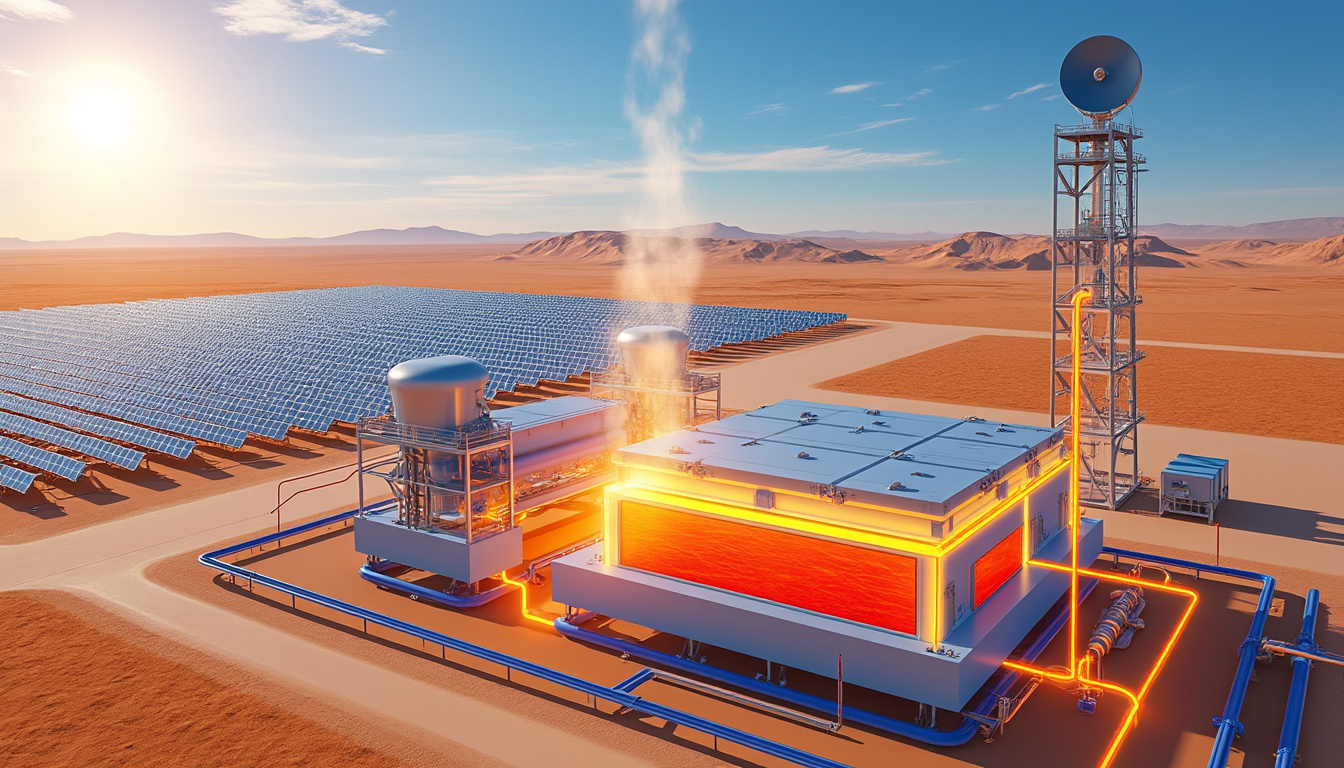
At the heart of CSP systems is the solar steam generator, which plays a vital role in producing the steam necessary for electricity generation. The process begins with sunlight being captured by the mirrors or lenses. This concentrated sunlight heats a HTF, such as molten salt or water, which subsequently forms steam. The steam is then routed to a turbine, where it expands, pushing the turbine blades and generating mechanical energy, which is converted into electrical energy by the generator.
Key Steps in the Solar Steam Generation Process
The solar steam generation process can be broken down into several key steps:
- Capturing Sunlight: The mirrors or lenses focus sunlight onto a receiver, significantly increasing the solar radiation’s intensity.
- Heating the Heat Transfer Fluid: The captured sunlight heats the HTF, raising its temperature to the point where it can effectively generate steam.
- Producing Steam: The heated HTF is then passed through a heat exchanger, where it boils water into steam.
- Driving the Turbine: The steam drives the turbine connected to a generator, creating electricity.
This method of generation is particularly efficient because CSP systems can incorporate thermal energy storage, allowing them to generate electricity even when sunlight is not available, such as at night or during cloudy periods. This is a distinguishing feature compared to photovoltaic systems, giving CSP a competitive edge in the renewable energy sector.
The Advantages of Concentrated Solar Power
CSP offers numerous benefits that position it as a powerful player in the renewable energy landscape. Some of the primary advantages include:
- Dispatchability: Unlike traditional solar PV systems, CSP systems can produce energy on demand due to their ability to store thermal energy.
- Scalability: CSP plants can be designed to meet specific energy needs, from small to utility-scale projects.
- Reduced Land Footprint: CSP can produce significant amounts of energy using a smaller land footprint compared to traditional fossil fuel plants.
- Job Creation: The construction and maintenance of CSP plants generate employment opportunities in local economies.
The viability of CSP technologies continues to be enhanced by innovations such as supercritical carbon dioxide (sCO2) power cycles, which can improve the thermal efficiency of plants by increasing output while reducing costs. For example, companies like GE Renewable Energy are pioneering this technology, aiming to maximize the sustainability of CSP systems.
The Role of Energy Storage in CSP Systems
Energy storage is a critical factor in the efficiency and reliability of CSP systems. By storing thermal energy, CSP plants can mitigate the intermittent nature of solar energy generation. Several storage technologies are implemented in CSP systems:
- Molten Salt Storage: One of the most common forms, where molten salt serves as both a heat transfer medium and a thermal energy storage solution.
- Solid Media Storage: Uses materials capable of storing heat, such as ceramic particles, which can achieve high thermal retention.
- Pumped Thermal Energy Storage: This advanced technique integrates CSP with other renewable sources, such as wind or solar photovoltaic, optimizing energy production across different conditions.
Thermal energy storage solutions allow CSP systems to operate as flexible energy peakers, supplying electricity during peak demand periods, enhancing their role in the broader energy grid. For instance, the Ivanpah Solar Power Facility effectively uses thermal storage to deliver an additional layer of reliability to its operations.
Global Deployment of Concentrated Solar Power Technologies
The deployment of CSP technology has seen significant growth globally, with countries such as the United States, Spain, and China leading the way. As of 2023, installed CSP capacity reached approximately 8.1 GW, reflecting a growing recognition of the potential of CSP as a reliable renewable energy source.
Countries like Morocco have pioneered large-scale CSP projects, such as the Noor Solar Complex, indicating the potential for CSP technology not only to contribute to national energy security but also to foster economic development through local job creation and infrastructure investment. The global landscape for CSP is outlined in Table 1 below, showcasing key players and their contributions:
| Country | Installed Capacity (GW) | Notable Projects |
|---|---|---|
| United States | 1.74 | Ivanpah, Solar One |
| Spain | 2.3 | Gemasolar, Andasol |
| Morocco | 0.510 | Noor Solar Complex |
| China | Approx. 1.535 | Huanghe Hydropower Golmud Solar Park |
While CSP projects face competition from rapidly decreasing photovoltaic prices, their ability to provide dispatchable energy makes them particularly valuable in regions with high solar radiation and energy demand fluctuations.
Comparaison des technologies CSP
| Technologie | Efficacité (%) | Avantages | Inconvénients |
|---|---|---|---|
| Fresnel | 10 – 15% | Coût réduit, installation flexible | Efficacité relativement basse |
| Parabolique | 15 – 20% | Haute efficacité, technologie éprouvée | Haut coût initial |
| Tour | 20 – 25% | Efficacité maximale, stockage d’énergie | Coûts d’installation très élévés |
| Canopy | 12 – 18% | Esthétique, réduction du bruit | Efficacité variable selon l’emplacement |
What is Concentrated Solar Power (CSP)?
CSP is a renewable energy technology that uses mirrors or lenses to focus sunlight onto a small area, generating heat that can produce electricity.
How does a solar steam generator work?
A solar steam generator captures sunlight to heat a heat transfer fluid, which converts water into steam, driving a turbine to generate electricity.
What are the advantages of CSP over photovoltaic systems?
CSP can store thermal energy, making it dispatchable, while photovoltaics typically generate electricity only during daylight.
Which countries are leading in CSP deployment?
The United States, Spain, Morocco, and China are at the forefront of CSP technology deployment worldwide.
The future of concentrated solar power is bright, with ongoing innovations in energy storage and efficiency set to enhance its capability to contribute significantly to a sustainable energy future.

