

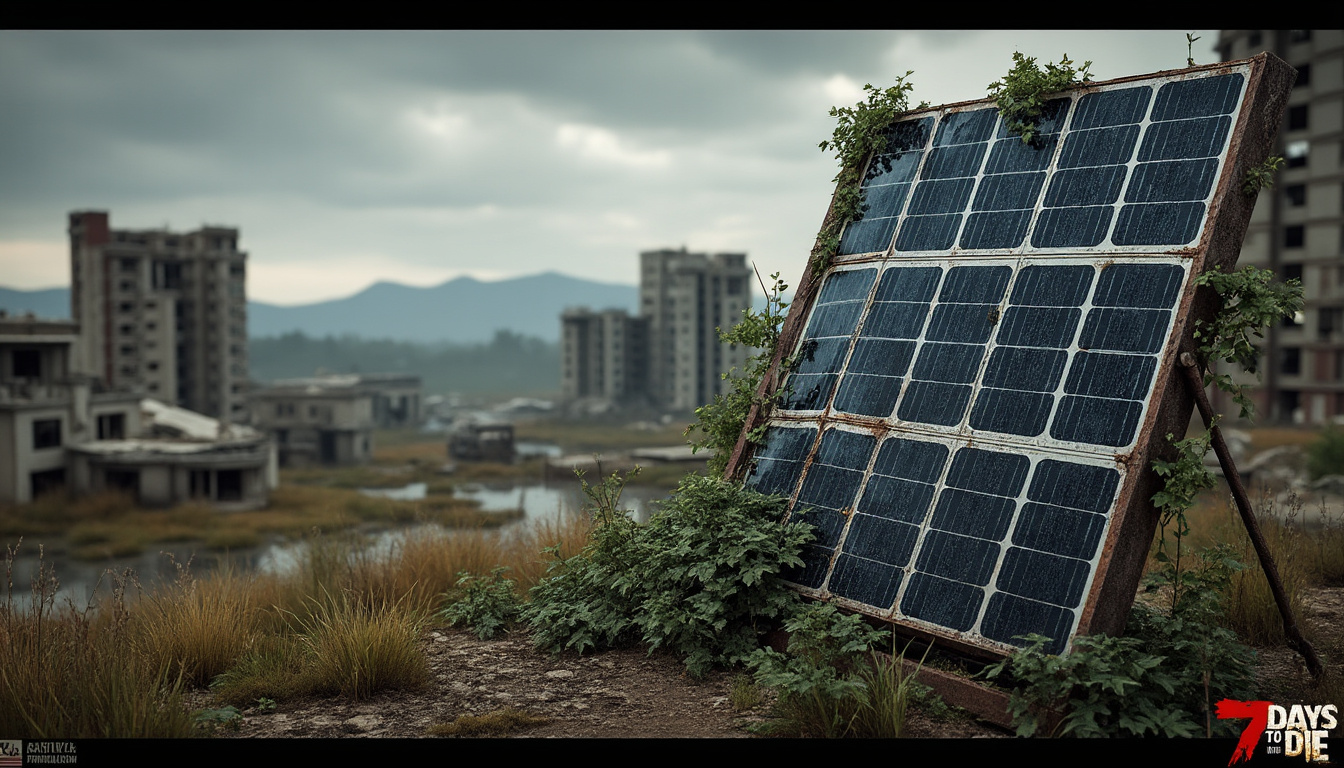
In the world of gaming, 7 Days to Die stands out as a survival horror title, combining elements of crafting, building, and resource management. As players navigate the post-apocalyptic landscape, efficient energy use becomes a critical aspect of survival. The incorporation of solar technology, particularly through Solar Banks and Solar Cells, highlights the growing importance of renewable energy in both gaming and real life. With the depletion of fossil fuels and the march towards sustainable energy solutions by 2025, these in-game components pose interesting parallels with real-world solar advancements. This exploration delves into the functionality, benefits, and strategies regarding Solar Cells within 7 Days to Die, illuminating their relationship with contemporary solar technology.
Decoding Solar Cells in 7 Days to Die
Solar Cells in 7 Days to Die play a pivotal role in facilitating energy generation, allowing players to harness solar power for various components within their bases. Unlike traditional power sources that require fuel or complex maintenance, the in-game Solar Cells provide a renewable, cleaner alternative. Players often find themselves in dire need of energy solutions that do not depend on constant manually sourced resources, making Solar Cells a game-changer.
Understanding the Functionality of Solar Cells
In the game, Solar Cells are non-craftable items that cannot be conjured through traditional means. They can only be acquired through specific gameplay actions such as purchasing from traders or scavenging in high-tier locations. Each Solar Cell can be inserted into a Solar Bank, which acts as the main unit that converts sunlight into usable electrical energy.
The maximum output a Solar Bank can produce is heavily influenced by the quality and number of Solar Cells installed. Players can insert between one and six Solar Cells, with the quality impacting the total power output. For example, a Solar Bank powered by six quality 6 Solar Cells can produce up to 180 watts, demonstrating the importance of upgrading and maintaining high-quality cells for optimal performance.
| Solar Cell Quality | Power Output (Watts) |
|---|---|
| Quality 1 | 17 W |
| Quality 2 | 20 W |
| Quality 3 | 22 W |
| Quality 4 | 25 W |
| Quality 5 | 27 W |
| Quality 6 | 30 W |
As players immerse themselves in building solar energy systems, understanding this mechanic is crucial to developing a more resilient base capable of surviving the challenges of the game. A well-planned solar design can save not only resources but also ensure a clean energy supply in a world teeming with threats.
Strategically Acquiring Solar Cells
Players wishing to incorporate Solar Cells into their gameplay have only a few routes to acquire these essential components. The rarity and complexity of Solar Cells mean that players must approach their acquisition strategically. Here are three primary methods:
- Finding: Players may stumble upon Solar Cells during the exploration of electronics stores, electronics crates, or hardened loot chests. However, only the most seasoned scavengers should expect to find them.
- Buying: Purchasing from traders requires not just in-game currency but also considerable bartering skills. Elite players often have their sights set on these transactions, affording them unique energy advantages.
- Earning: Completing high-level quests occasionally yields opportunities to receive Solar Bank bundles as rewards. Experienced players may strategize quest selections accordingly, hoping to secure solar technology.
Integrating this solar technology presents an engaging gameplay experience, forcing players to weigh the benefits of renewable energy against the linear routes of the game’s mechanics.
Implementation of Solar Banks and Their Solar Cells
The Solar Bank serves as the central hub in the quest for sustainable energy in 7 Days to Die. Here, the Solar Cells come together to produce electrical current, powering various devices around the player’s base. Understanding the implementation process and interacting with Solar Banks can heavily influence gameplay.
Connecting Solar Banks and Devices
To maximize the effectiveness of Solar Banks, players need to connect them with their intended electrical devices using the Wire Tool. The installation process may appear simple, yet it requires a keen eye for placement to ensure maximum sun exposure. Solar Banks operate exclusively during daylight hours, creating a unique challenge unlike that of conventional generators which function independently of sunlight.
Understanding Power Consumption and Storage
Powering devices with a Solar Bank demands sharp awareness of energy consumption rates and the ability to monitor power outputs. Whenever the Solar Bank is active during the daytime, it produces energy based on how many and what quality of Solar Cells are in place. Players with knowledge of electrical management can store excess energy using Battery Banks for night time usage, preventing any critical lapses in power.
Some strategies to consider include:
- Utilizing Battery Banks to store energy for night usage.
- Strategically planning power-hungry device usage during peak sunlight hours.
- Regularly checking the Solar Bank’s current power output to avoid device shutdowns.
By engaging with these systems proactively, players can create sustainable power grids that minimize the risk of energy shortages amid the chaos of the game’s world.
The Real-World Connection: Insights on Renewable Energy
The design of Solar Banks and Solar Cells in 7 Days to Die unknowingly reflects the struggles and success of real-world renewable energy solutions available today. The growing reliance on solar power technology within the game mirrors society’s collective shift towards cleaner energy resources amid rising concerns regarding climate change and fossil fuel depletion.
Catalysts for Change: Solar Power Growth
Just as Solar Banks represent a viable source of power in the game, advancements in actual solar technology have also yielded impressive results. In 2025, the transition to solar is becoming essential, with installations of rooftop solar panels becoming increasingly prevalent across multiple sectors. This sharp increase has been fueled by innovative solutions from companies such as Renogy, Goal Zero, and SunPower, which have led the way in providing quality solar systems for residential and commercial use.
These companies have developed efficient solar solutions that align with the functionalities found in 7 Days to Die, representing the potential for players to draw realistic parallels between their gaming experience and actual workflows in an eco-friendly future.
Solar Power System Components
To understand real-world solar systems, it’s essential to consider their main components, which can also be seen as counterparts to those within the game.
- Solar Panels: Similar to Solar Cells in the game, these essential elements capture sunlight and convert it into electricity.
- Inverters: They convert the direct current (DC) generated by solar panels into alternating current (AC), making it suitable to power home appliances and systems.
- Battery Storage Systems: Much like Battery Banks, these are critical for storing excess energy, ensuring continuous supply when solar generation is low.
- Monitoring Systems: Tracking energy generation and consumption mirrors the feedback players receive from their in-game solar systems.
Investments made today in solar technology foster a more resilient tomorrow, akin to how players must invest in Solar Banks and Cells to thrive in an unforgiving in-game world.
Challenges and Solutions in Using Solar Power in the Game
Despite the benefits of Solar Banks and Solar Cells, players face substantial challenges related to setup and maintenance. Navigating the nuances of energy management can be tricky. This section dissect tragic points while offering strategies for overcoming them.
Identifying Common Pitfalls
Having a Solar Power system in place is only the beginning. Players often encounter various issues including:
- Placement of Solar Cells: Incorrect placements, limited sun exposure or obstructions can severely restrict energy generation.
- Lack of Barter Skills: Without high-level bartering capabilities, acquiring essential components becomes nearly impossible.
- Failing to Use Battery Banks: Not employing Battery Banks can lead to power shortages when solar generation ceases at night.
- Vulnerability to Attacks: Solar Banks and Cells being valuable assets may attract unwanted attention from enemies.
Techniques for Efficient Management
Players can employ multiple strategies to enhance their solar systems and ensure efficient running:
- Regular Re-assessments: Monitoring power output and recalibrating the number of Solar Cells in relation to energy demands keeps systems optimal.
- Improving Scavenging Skills: Plan expedition paths focusing on potential high-quality loot locations.
- Protecting Equipment: Building fortifications around solar infrastructure to ward off marauders enhances the chances of longevity for solar setups.
Ultimately, successful navigation through these obstacles can lead to enhanced gameplay opportunities, shaping a more varied in-game experience and deeper engagement with the underlying mechanics.
Frequently Asked Questions
What are Solar Cells used for in 7 Days to Die?
Solar Cells are used to generate electricity when inserted into a Solar Bank, providing a sustainable energy source for various devices in the game.
How can I acquire Solar Banks and Solar Cells?
You can acquire Solar Banks and Solar Cells by scavenging, purchasing from traders, or earning them through quests.
What is the maximum power output of a Solar Bank?
The maximum power output of a Solar Bank can reach 180 watts with six quality six Solar Cells installed.
Can Solar Banks function at night?
No, Solar Banks only produce energy during the day; players must consider energy storage solutions like Battery Banks for night usage.
How can I connect devices to a Solar Bank?
You can connect devices using the Wire Tool, ensuring they draw power from the Solar Bank efficiently.

