Maintaining the efficiency of solar panels is crucial for homeowners who have invested in renewable energy systems. Cleaning solar panels helps prevent efficiency losses attributed to dirt and grime build-up. However, the method of cleaning them is essential, particularly when it comes to prioritizing safety. This article delves into the various aspects of cleaning solar panels from the ground, outlining best practices, necessary tools, and the risks associated with improper handling.
Understanding the dynamics of solar panel cleaning can significantly impact your energy savings and longevity of your investment. As more homeowners embrace solar energy, it’s vital to educate oneself on proper cleaning methods tailored to specific situations. This guide empowers you to make informed decisions, whether you opt for DIY methods or seek professional assistance. So, let’s discuss how to maintain solar panels without jeopardizing safety or quality.
Understanding the Importance of Cleaning Solar Panels
The need for regular maintenance of solar panels cannot be understated. Dust, bird droppings, tree pollen, and other substances accumulate on the surface over time, and this phenomenon, known as “soiling,” creates a barrier hindering sunlight from reaching the solar cells. Research indicates that this accumulation can lead to a decrease in efficiency of up to 25%, affecting your energy output significantly.
Many homeowners believe that rain would suffice for cleaning, but it often falls short, especially when dealing with stubborn deposits like pollen. Light rain can create a sticky residue that clings to the panels, compounding the issue. Therefore, understanding the necessity of a proactive cleaning approach is essential for maintaining a solar panel system.
To further illustrate the importance of cleaning, it’s useful to consider how different environments affect solar panel cleanliness. Below is a table exemplifying the primary cleaning challenges in various cities:
| City | Main Soiling Concerns | Impact on Panels & Cleaning Method |
|---|---|---|
| Phoenix, AZ | Desert Dust, Hard Water Minerals | Dust from storms can form a hard layer, requiring specialized cleaning solutions. |
| Los Angeles, CA | Urban Smog, Wildfire Ash | Soot and ash create thick barriers blocking sunlight; gentle cleaning is required. |
| Atlanta, GA | Tree Pollen | The spring pollen season results in a sticky layer that isn’t washed away easily. |
| Denver, CO | High-Altitude Dust | Dust from wildfires poses unique challenges; special cleaning attention is needed. |
Preparing for Safe Solar Panel Cleaning from the Ground
Whether you choose to clean your solar panels yourself or enlist the help of professionals, preparation is key. Following safety guidelines and understanding the equipment required can make all the difference. Familiarize yourself with your solar panel manufacturer’s cleaning instructions to avoid damaging the surface.
Start by shutting down the solar panel system completely. Follow the recommended shutdown procedures to prevent electrical hazards. Cleaning the panels during cool, overcast weather or early in the morning is preferable, as this minimizes thermal shock risks that might occur when water hits overheated glass.
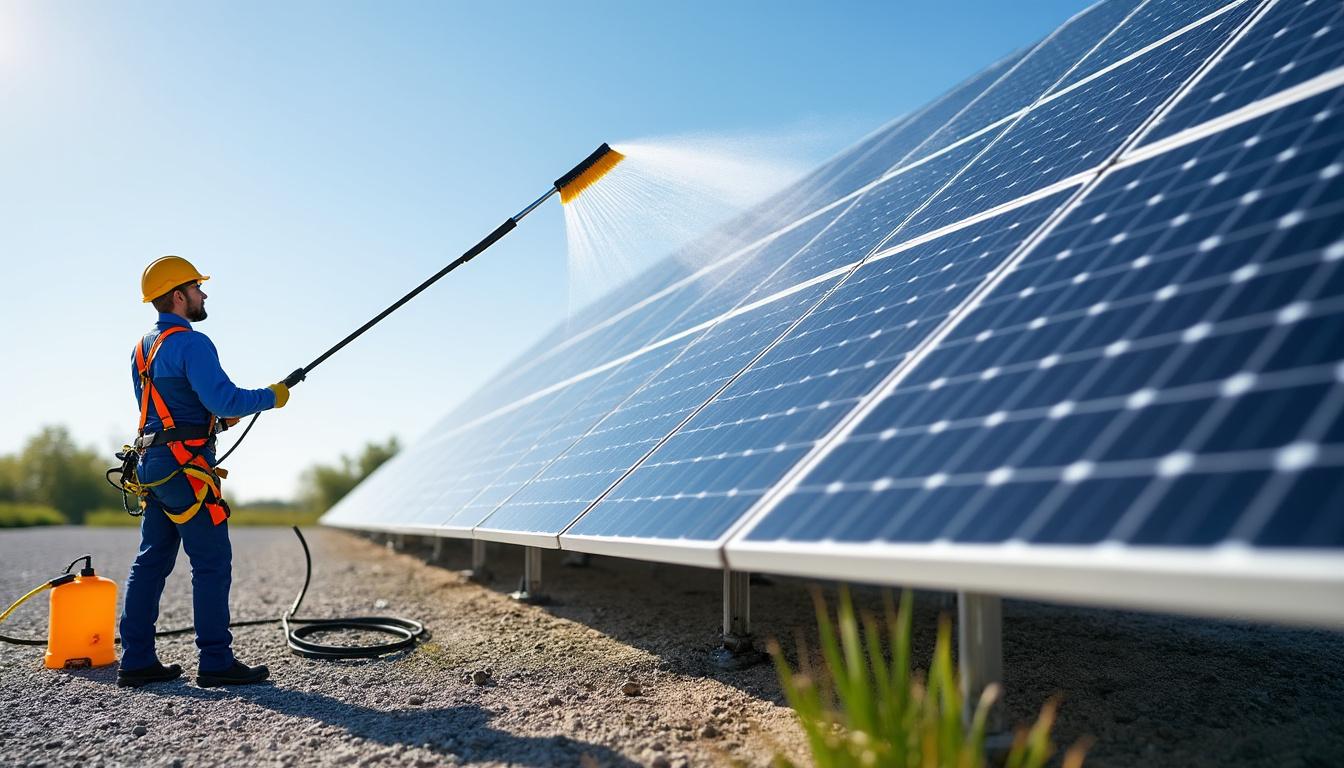
Your cleaning toolkit should include:
- Telescopic Pole: This allows you to reach high panels safely.
- Soft-Bristled Brush: Essential for removing dirt without scratching the panels.
- Garden Hose with Adjustable Nozzle: Use this for gentle rinsing to avoid high-pressure streams.
- Bucket and Mild Cleaning Solution: Combine water with mild, non-abrasive soap to enhance cleaning.
The Ground Cleaning Method: Step-by-Step
Once you’re equipped and prepared, follow this structured approach to ensure effective cleaning:
- Initial Rinse: Gently spray panels from the top down with clean water to eliminate loose debris.
- Apply Solution & Scrub: Use your soft brush dipped in the cleaning solution to wipe the panels lightly, ensuring no excess pressure.
- Thorough Final Rinse: Rinse again with clean water to remove soap residue, preventing any new dirt from sticking.
- Drying: Allow panels to air dry, or use a soft rubber squeegee for drying to avoid spots.
Following these steps helps maintain energy efficiency while ensuring safety throughout the cleaning process.
Evaluating the Risks of DIY Cleaning
Despite the appeal of DIY cleaning, significant risks are inherent when attempting this task improperly. Solar panels are active electrical devices; therefore, errors can lead to serious hazards.
Here are potential dangers associated with ground cleaning:
- Electrical Risks: The threat of electrocution exists if water and electrical components mix.
- Improper Tools: Using harsh brushes or pressure washers can damage the fragile surfaces of solar panels.
- Inadequate Cleaning: A subpar clean may leave behind residues that lead to reduced efficiency over time.
If you are unsure about your ability to clean safely, seeking assistance from professionals is advisable. Companies like SolarClean Pro or SafeSun Solutions have trained technicians equipped with the correct tools and knowledge.
The Benefits of Professional Solar Panel Cleaning Services
When considering the risks and challenges of cleaning your panels alone, opting for a professional service may be the prudent choice. Licensed companies offer the experience needed to optimize the solar panel system while ensuring a thorough and safe cleaning.
Some benefits of utilizing professional services include:
- Advanced Cleaning Technologies: Professionals often employ pure water technology, which is deionized to prevent mineral build-up.
- Comprehensive Inspections: Experts can identify potential issues such as wiring problems or cracks that less experienced individuals might miss.
- Insurance Coverage: Professional cleaning services are usually insured, providing peace of mind regarding liability.
| City | Average Cost Per Panel | Total Cost (20-25 Panels) |
|---|---|---|
| Phoenix, AZ | $6 – $13 | $150 – $400 |
| Los Angeles, CA | $8 – $25 | $200 – $500 |
| Houston, TX | $7 – $15 | $175 – $450 |
| Miami, FL | $8 – $25 | $150 – $330 |
Key Takeaways on Solar Panel Maintenance
As evident, maintaining solar panels requires a deliberate approach to cleaning. Prioritizing methodical practices ensures your panels operate efficiently without compromising your safety. Whether a DIY enthusiast or a cautious homeowner, understanding the limitations of ground cleaning methods equips you to make better decisions regarding your solar investments.
With rising awareness about renewable energy solutions like solar panels, it’s essential to also recognize the significance of their upkeep. By ensuring regular cleaning and maintenance – whether performed by you or a service such as ClearView Solar or GreenGlide Panels – you’re contributing to a sustainable future while optimizing your energy production.
What are the risks of cleaning solar panels from the ground?
Cleaning solar panels from the ground poses electrical risks, improper tool use, and inadequate cleaning which can damage the panels.
How often should I clean my solar panels?
Regular cleaning typically depends on the local environment; however, a good practice is to check panels quarterly or after significant weather events.
What tools do I need for DIY cleaning?
You’ll need a telescopic pole, a soft-bristled brush, a garden hose, and a mild cleaning solution.
Can rain clean my solar panels?
While rain can help, it often fails to remove sticky residues like pollen or bird droppings.
What is the average cost of professional solar panel cleaning?
Professional cleaning costs vary by location, averaging between $6 to $25 per panel, making it a worthy investment for efficiency.
Comparative Table of Solar Panel Cleaning Tools
| Tool | Safety | Cost | Ease of Use |
|---|---|---|---|
| Telescopic Pole | Safe access | High | Moderate |
| Soft-Bristled Brush | Prevents scratches | Moderate | Easy |
| Garden Hose | Provides pressure control | Low | Very Easy |
| Bucket & Mild Cleaning Solution | Easy to use | Affordable | Very Easy |