
The state of Louisiana showcases a promising frontier for solar energy adoption, marked by an extensive array of solar incentives designed to encourage both homeowners and businesses to invest in renewable energy solutions. With an impressive average of 220 sunny days per year, Louisiana’s warm and humid climate provides ample opportunities for harnessing solar power. Residents stand to gain significant financial benefits through various incentive programs, including tax credits, rebates, and favorable financing options aimed at lowering the upfront costs associated with solar system installation. This article dives into the heart of Louisiana’s solar incentive ecosystem, detailing the financial rewards and programs available for those looking to transition to solar energy.
Understanding Louisiana Solar Incentives and Rebates
Louisiana actively promotes solar energy through a spectrum of incentives aimed at making solar system installations more affordable. For homeowners and businesses alike, these incentives can lead to substantial savings on both installation costs and ongoing energy bills. The primary incentives include the Federal Solar Investment Tax Credit (ITC), state-specific rebates, and financing options that are tailored to meet the diverse needs of Louisiana residents. Each of these programs plays a vital role in rending solar energy as an accessible and attractive option.
The Federal Solar Investment Tax Credit (ITC)
The Federal Solar Investment Tax Credit (ITC) serves as a cornerstone for solar incentives across the United States, including Louisiana. Under this program, homeowners can claim a substantial tax credit amounting to 30% of the total cost of their solar photovoltaic (PV) system installation. This means that for a solar system costing $20,000, a homeowner can potentially receive a $6,000 reduction in their tax liability, making solar investments considerably more affordable.
Originally, the ITC allowed for a 26% credit for systems installed in 2021 and 2022. However, recent extensions under the Inflation Reduction Act have adjusted this figure upward to 30% for installations from 2022 to 2032. Importantly, this tax credit will gradually decrease to 26% in 2033 and 22% in 2034, ultimately expiring in 2035 unless Congress acts to renew it. Timing is crucial for potential buyers as these credits significantly impact the return on investment for solar installations.
- 30% tax credit: For installations from 2022 to 2032.
- 26% tax credit: For installations in 2033.
- 22% tax credit: For installations in 2034.
- Expiration: ITC expires in 2035 unless renewed.
| Installation Year | Tax Credit (%) | Notes |
|---|---|---|
| 2022-2032 | 30% | Extended by Inflation Reduction Act |
| 2033 | 26% | Scheduled reduction |
| 2034 | 22% | Final step before expiration |
| 2035 | Expired | Unless renewed by Congress |
Louisiana’s State-Specific Solar Incentives
Beyond the federal ITC, Louisiana offers its own array of incentives and rebates designed to support solar adoption. One such program is the Home Energy Loan Program (HELP), which provides low-interest loans to homeowners who wish to go solar or undertake energy efficiency improvements. To qualify for these loans, homeowners must undertake an energy audit and follow the recommendations provided. This financial assistance significantly lowers the barriers associated with solar investments.
Additionally, Louisiana residents benefit from a sales tax exemption when purchasing solar energy systems. The law stipulates that homeowners do not need to pay sales tax on essential equipment such as solar panels, racking, and inverters, making the financial investment in solar energy even more attractive.
- Low-interest HELP loans: Available for solar installations and energy efficiency improvements.
- Sales tax exemption: Applicable to purchases of solar equipment.

Financial Impacts of Solar Adoption in Louisiana
The financial advantages of adopting solar energy in Louisiana extend beyond upfront savings from rebates and tax credits. By investing in solar systems, homeowners can benefit from long-term reductions in energy bills, protect themselves against fluctuating energy prices, and even generate income through net metering programs. Understanding the economic landscape of solar energy in Louisiana reveals significant advantages for residents.
Residential Solar Credits and Energy Savings
Another key aspect impacting homeowners’ decisions to go solar involves savings on energy bills. By leveraging Louisiana solar incentives combined with state energy regulations, homeowners can significantly reduce their electricity costs. On average, residents can save between $1,000 and $1,500 annually on their electricity bills after installing a solar energy system, depending on their energy consumption and the size of their solar array.
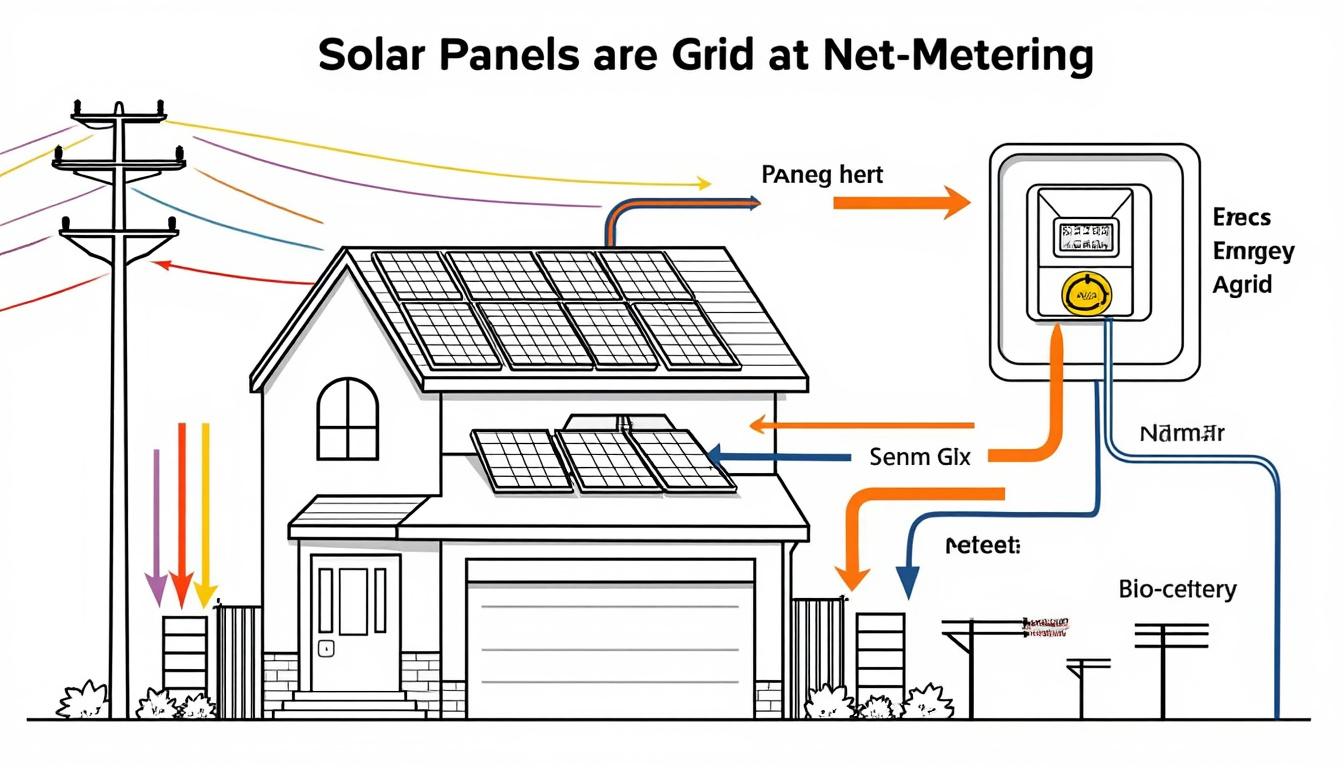
Furthermore, through net metering Louisiana laws, solar panel owners can receive credits on their utility bills for excess electricity generated. If homeowners produce more power than they consume, they can sell the surplus back to the grid. As a result, the credits accrued can offset future electricity consumption, allowing for even greater savings in the long run.
- Average savings: $1,000-$1,500 annually on electricity bills.
- Net metering: Earn credits for excess energy contributed to the grid.
| Energy Savings Parameter | Value |
|---|---|
| Average Annual Savings | $1,000 – $1,500 |
| Net Metering Benefits | Credits for surplus electricity |
The Role of Net Metering in Louisiana
Net metering plays a pivotal role in enhancing the value of solar energy systems in Louisiana. This arrangement allows solar panel owners to receive compensation for the surplus energy they produce and feed back into the electric grid. The basic principle of net metering is straightforward: when solar panels generate more electricity than a household consumes, that excess energy is sent back to the grid, resulting in a credit reflected on the homeowner’s utility bill.
However, it’s important to note that while net metering was originally a mandatory policy, its status changed in 2019. Currently, utilities are not legally required to offer net metering, though some do provide the service at reduced buy-back rates. Consequently, not all solar panel owners may have access to net metering benefits, which can influence their overall savings from solar investments.
- Credit system: Homeowners receive credits for electricity sent back to the grid.
- Variable utility participation: Not all utilities offer net metering, impacting savings.
Grid Stability and Sustainability Benefits
Participating in net metering not only allows homeowners to save money but also contributes to a more sustainable energy landscape in Louisiana. As more residents adopt solar energy systems, they reduce reliance on fossil fuels, thus helping to mitigate environmental impacts. Moreover, distributed solar energy generation supports grid stability by reducing peak demand on centralized power plants.
Cleaning up Louisiana’s energy sector and promoting renewable energy has garnered attention in recent years as part of the broader transition to a sustainable energy future. As more residents align with this vision, the collective impact of individual solar systems through net metering contributes significantly to achieving long-term sustainability goals.
Future of Solar Incentives in Louisiana
The future of solar incentives in Louisiana appears bright due to ongoing advocacy for renewable energy policies and residents’ increasing interest in solar technologies. As the state continues to invest in innovative programs, the landscape for solar adoption is likely to expand significantly. Key developments on the horizon may include improved financing options, additional tax credits, and enhanced rebate programs to further stimulate residential and commercial solar investments.
Potential Developments in Solar Policy
Looking ahead, potential legislative changes at both state and federal levels could enhance the existing ecosystem of solar incentives. Stakeholders in the renewable energy sector are continually pushing for the extension and expansion of the ITC, as well as state-specific programs that encourage widespread adoption of solar technologies. Furthermore, as more Louisiana residents gain awareness of the environmental and economic benefits of solar energy, pressure for favorable policies may lead to innovative solutions in solar financing, which might mitigate upfront installation costs.
- Advocacy for ITC extensions: Efforts to secure more favorable tax credits.
- Enhanced solar programs: Potential for new and improved incentives.
Louisiana Solar Incentives
Credits, Rebates, and Rates
Investment Tax Credit (ITC)
Get up to 26% tax credit on your solar system installation costs.
State Rebates
Various rebate programs available for homeowners. Contact your local utility for more info.
Financing Options
Zero-interest loans and low-interest financing are available to make solar more affordable.
Savings Potential
Homeowners can save an average of $20,000 over 20 years with solar energy.
Detailed Data
Impact on Energy Independence
As Louisiana continues to develop its solar energy policies, the potential for enhanced energy independence becomes increasingly apparent. Fostering solar adoption could reduce the state’s reliance on external energy sources, thereby strengthening its energy security in the long term. An increased prevalence of residential solar adoption would also align Louisiana with broader national goals of shifting to sustainable and renewable energy sources, ultimately benefiting the environment while providing economic opportunities.
What are the main solar incentives available in Louisiana?
The main solar incentives in Louisiana include the Federal Solar Investment Tax Credit (ITC), state-specific rebates, low-interest loans through the Home Energy Loan Program, and sales tax exemptions on solar equipment purchases.
How does net metering work in Louisiana?
Net metering allows solar panel owners to receive credits for any excess electricity generated by their solar systems and fed back into the grid, effectively reducing future electricity bills.
What are the savings homeowners can expect with solar energy in Louisiana?
Homeowners can expect to save an average of $1,000 to $1,500 annually on their electricity bills after installing a solar energy system, thanks to rebates and net metering benefits.
Will solar incentives change in the future?
With ongoing advocacy for renewable energy policies, there is the potential for changes and enhancements to solar incentives at both national and state levels, which may benefit prospective solar adopters.
What equipment is eligible for sales tax exemption in Louisiana?
Solar panels, racking systems, and inverters are eligible for sales tax exemption in Louisiana, making it more financially accessible for homeowners and businesses to invest in solar energy.