

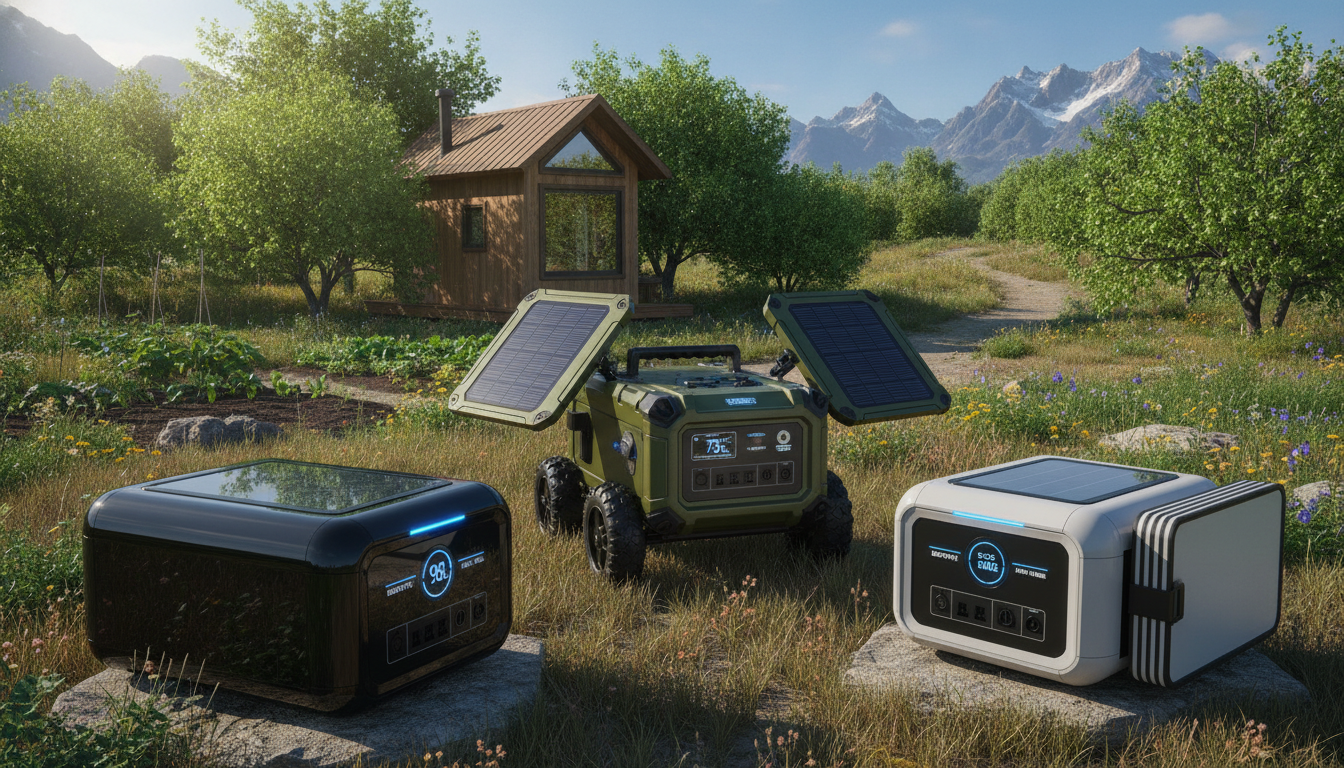
When considering a solar generator, it’s crucial to assess your specific energy needs. The right choice can significantly impact your daily operations. For instance, the Anker SOLIX C300 provides a continuous output of 300W, making it ideal for smaller, portable requirements. In contrast, the EcoFlow DELTA Pro 3 delivers an impressive 4,000W, catering to larger-scale applications.
In 2025, our team evaluated over two dozen portable power stations. This thorough analysis helped us identify which options deliver reliable performance. Understanding the balance between power output and battery capacity is essential for anyone planning to use these systems in remote locations.
Additionally, durability plays a vital role. A generator must withstand harsh environments to ensure long-term functionality. This guide aims to provide you with the insights needed to select a system that meets your unique electricity and storage requirements.
Key Takeaways
- Assess your specific power needs before selecting a solar generator.
- Evaluate the balance between power output and battery capacity.
- Durability is crucial for long-term use in various climates.
- Consider the performance of different models for reliable energy solutions.
- This guide offers insights to help you make informed decisions.
Overview of Solar Generators for Off-Grid Living
It’s important to comprehend the workings of a solar generator to optimize your energy needs. A solar generator is essentially a portable power station that combines a battery, inverter, and solar charge controller into one unit. This design allows users to generate and store energy in remote locations effectively.
Unlike traditional grid-tied systems, these units offer portability. This means you can generate and store energy for essential appliances, such as refrigeration and lighting, without relying on the grid. The U.S. Energy Information Administration reports that the average household consumes approximately 29 to 30 kWh of electricity daily.
When living off the grid, having a robust solar setup is crucial. Your daily energy consumption must be matched by your battery capacity and the sunlight available. By assessing your energy needs, you can determine whether a portable solar generator is sufficient or if a larger system is necessary. For more detailed insights, check out our guide on off-grid solar systems.
SolarGeng: Your Technical Partner in Solar Energy
To harness solar energy effectively, one must delve into the intricacies of energy systems. At SolarGeng, we pride ourselves on being more than just a service provider. We operate as a true technical partner, focusing on your long-term success in the energy sector.
Our commitment to knowledge transfer and capacity building ensures that you develop internal expertise. This approach allows you to benefit from our specialized knowledge while gaining the skills necessary to manage complex energy systems.
Through our collaborative partnerships with leading developers and technology providers, we optimize every system for maximum efficiency. Our goal is to provide the guidance necessary for you to navigate the complexities of solar energy.
- SolarGeng focuses on long-term success for every client.
- We emphasize knowledge transfer to build internal expertise.
- Our partnerships enhance system efficiency and reliability.
- We provide guidance to ensure your power infrastructure lasts.
Understanding Power, Capacity, and Durability Requirements
Balancing energy storage and output is crucial for designing a system that reliably powers essential appliances. You must calculate your total power needs by multiplying the wattage of each device by the number of hours you intend to run it daily. This calculation ensures that your system can meet the energy demands of your lifestyle.
Durability in harsh environments is another key factor. Equipment must withstand temperature fluctuations and physical stress when used in remote locations. Our testing protocols guarantee that every system we recommend can handle the continuous power demands of your specific energy requirements.
Proper sizing of your battery capacity prevents deep discharges, helping maintain the longevity of your system. This is especially important when you are living far from the grid, where reliability is paramount.
- Balancing energy storage and output is essential for reliable power.
- Calculate total power needs for effective energy management.
- Durability ensures equipment withstands harsh conditions.
- Testing protocols confirm performance under demanding circumstances.
- Proper battery sizing extends system longevity.
Key Features of Leading Solar Generators
Leading models of portable power solutions now come equipped with advanced technology to enhance performance and safety. Modern systems integrate sophisticated Battery Management Systems that protect against over-voltage, over-current, and extreme temperatures. This ensures reliable operation during daily use.
Additionally, many units now feature smart app connectivity. This allows users to monitor their power flow in real time, optimizing charging strategies based on available sunlight. Such innovations enhance user experience and efficiency.
High-quality options also include pure sine wave inverters. These are essential for the safe operation of sensitive electronics and modern communication devices. Furthermore, the modular design of these systems enables users to expand battery capacity as energy needs evolve.
Lastly, safety certifications, such as UL or ETL marks, are critical indicators of reliability. These marks confirm that the generator has undergone rigorous testing for safety in residential settings.
| Feature | Description | Benefits |
|---|---|---|
| Battery Management System | Protects against over-voltage and temperature | Ensures safety and reliability |
| Smart App Connectivity | Real-time power monitoring | Optimizes charging strategies |
| Pure Sine Wave Inverter | Safe for sensitive electronics | Prevents damage to devices |
| Modularity | Expandable battery capacity | Adapts to growing energy needs |
| Safety Certifications | UL or ETL marks | Assures tested reliability |
Exploring Different Solar Generator Models
Exploring various models of portable power solutions reveals distinct advantages tailored to different needs. Understanding these options can help you make informed decisions about your energy requirements.
Small Portable Options
The Anker SOLIX C300 model is a small portable option that provides 300W of power and 288Wh of capacity. This makes it ideal for charging small devices like phones and laptops.
Midsize and Large Systems
For those with greater energy demands, the EcoFlow DELTA 3 Plus model offers 1,800W of power and 1,024Wh of capacity, perfect for daily needs. Meanwhile, the EcoFlow DELTA Pro 3 stands out with 4,000W of power and 4,096Wh of capacity, making it suitable for partial home backup and heavy tools.
Additionally, the Bluetti Elite 200 V2 model features 2,600W of power and 2,073.6Wh of capacity, utilizing advanced automotive-grade battery cells for enhanced performance. The OUPES Mega 1 is an affordable choice, delivering 2,000W of power and 1,024Wh of capacity, offering expandability for growing energy needs.
| Model | Power Output | Battery Capacity |
|---|---|---|
| Anker SOLIX C300 | 300W | 288Wh |
| EcoFlow DELTA 3 Plus | 1,800W | 1,024Wh |
| EcoFlow DELTA Pro 3 | 4,000W | 4,096Wh |
| Bluetti Elite 200 V2 | 2,600W | 2,073.6Wh |
| OUPES Mega 1 | 2,000W | 1,024Wh |
Comparative Analysis of Solar Generator Performance
Comparing the capabilities of various units is vital for ensuring you meet your specific energy needs. Our analysis focuses on the relationship between continuous power output and total battery capacity for different user scenarios.
We utilize a specialized tool to compare dozens of units based on their power output, storage capacity, price, weight, and types of inputs and outputs. This thorough evaluation helps you identify which option provides the most value.
Real-world testing is crucial. We measure the actual ability of each battery to output power to devices and charge efficiently from both AC and solar sources. Understanding the output limitations of your battery capacity is essential for ensuring that your appliances run smoothly without triggering safety shutdowns or system failures.
By comparing performance across models, you can make informed decisions tailored to your unique energy requirements. For more insights, explore our detailed analysis here.
User-Centric Design and Safety Approaches
Understanding the design and safety features of energy systems is essential for making informed choices. We prioritize user-centric design by recommending systems that utilize LFP battery chemistry. This type of battery is known for its exceptional safety and long-term stability.
LFP cells are significantly safer than older lithium chemistries. They have no risk of thermal runaway and are considered non-toxic for home use. These battery cells are designed to last for 3000 to 6000 cycles, providing a much longer service life for your power system than alternatives.
While LFP battery units may be slightly heavier, the safety and longevity benefits make them the superior choice for daily energy storage applications. Our evaluation process ensures that every battery we feature meets rigorous safety standards, protecting your home and family from potential electrical or fire hazards.
- We recommend systems using LFP battery chemistry for safety and stability.
- LFP cells eliminate risks associated with thermal runaway.
- These batteries offer a long service life, lasting thousands of cycles.
- Safety and longevity make LFP batteries ideal for daily energy needs.
- Our evaluation ensures rigorous safety standards are met.
Integration with Solar Panels and Energy Storage Solutions
Integrating high-quality solar panels with your energy system is vital for maximizing efficiency. This connection ensures that your battery capacity remains stable during extended periods of off-grid living in the United States.
You should aim for a solar input that is approximately 1 to 1.5 times your daily energy use divided by the average number of peak sun hours. This strategy helps in maintaining a consistent power supply.
Using MC4 connectors to link your solar panels to the generator ensures a secure and efficient connection. This setup maximizes the power harvested from the sun, enhancing overall system performance.
To optimize your solar input, position your panels to capture the most sunlight throughout the day. This is especially important during winter months when solar resources are lower.
We recommend developing a charging strategy that prioritizes solar energy. Use AC power only as a backup when weather conditions limit your solar panels’ output. For further insights, explore our detailed guide on off-grid solar systems.
Evaluating Inverter Performance and Compatibility with Power Tools
Assessing inverter performance is essential when planning to operate power tools effectively. This is particularly important for tools that require high startup surges for motor operation.
A pure sine wave output is necessary to ensure compatibility with sensitive electronics. This prevents damage that can occur with modified sine wave inverters.
Your inverter must have a surge capacity of at least two times its continuous power rating. This capacity is crucial to handle the initial load of refrigerators and power tools.
We rigorously test each unit to ensure that the power output remains stable. This stability is vital when running multiple appliances or heavy-duty tools simultaneously.
Choosing a generator with a robust inverter ensures that your system can handle the peak power demands of your daily life without interruptions. For further insights on choosing the right system, visit our detailed guide here.
Considerations for Off-Grid Living in the United States
Understanding local climate patterns is key to maximizing energy production in off-grid systems. Living without grid access in the United States requires careful planning. Regional climate and sunlight variability can significantly impact your daily energy generation potential.
NREL solar maps indicate that average daily full sun hours can range from under 3 hours in northern regions to over 6 hours in the Southwest. This variability means you must account for lower solar input during winter months, which can be 30 to 50 percent less than summer levels.
To ensure you have enough power to run essential loads throughout the year, design your system for the worst-case scenario. Analyzing local weather patterns will help you determine the number of sun hours you can reliably expect during the darkest months.
| Region | Average Daily Full Sun Hours | Winter Solar Input Reduction |
|---|---|---|
| Northern Regions | Under 3 hours | 30-50% |
| Southwest | Over 6 hours | 30-50% |
Real-World Applications of Solar Generators
The utility of solar generators extends beyond mere power supply, impacting various lifestyles. These versatile tools are essential for outdoor enthusiasts and homeowners alike.
Camping, RV Adventures, and Outdoor Living
Solar generators provide reliable power for essential devices while camping or enjoying RV adventures. They can charge phones, laptops, and portable LED lights, making outdoor experiences more enjoyable.
Home Backup and Emergency Power Use
In case of power outages, these units can keep your fridge running and support critical medical devices like CPAP machines. Many users rely on these systems to power a 12V fridge or a small AC fridge-freezer, ensuring food safety during long-term off-grid stays.
- Solar generators are versatile tools used for camping, RV adventures, and outdoor living, providing reliable power for phones, laptops, and portable LED lights.
- For home backup and emergency power use, these units can keep your fridge running and power essential medical devices like a CPAP machine during outages.
- Whether you are at a campsite or in your home, having a portable power source allows you to maintain your quality of life during emergencies.
- We have seen how these generators support various lifestyles, from weekend camping trips to full-time off-grid living in cabins or small, efficient tiny homes.
Best solar generator for off-grid living
Selecting the right energy solution is essential for ensuring your power needs are met. The ideal generator matches your daily energy consumption, peak power requirements, and available solar resources.
There is no single unit that fits everyone’s needs. Your choice will depend on whether you are powering a tiny cabin or a larger home. A high-quality generator should feature a LiFePO4 battery for long-term reliability. These batteries are designed to endure thousands of charge and discharge cycles.
By applying the knowledge gained in this article, you can confidently select a system that provides the necessary power and capacity for your lifestyle. Always prioritize systems that offer expandability, allowing you to increase battery capacity as your energy needs evolve.
The Role of Technical Partnerships in Enhancing System Reliability
Establishing strong technical partnerships is essential for optimizing the reliability of your energy system. These collaborations provide access to specialized engineering and design expertise, ensuring that your setup operates efficiently.
By working with experienced partners, you can guarantee that your system is correctly sized and integrated. This proactive approach helps prevent common failures often seen in remote energy setups.
Knowledge transfer is a vital aspect of these partnerships. It empowers you to manage your own power infrastructure with confidence and technical proficiency over time. As we often say,
“Long-term success in off-grid living is built on a foundation of reliable equipment and the support of experts who understand your needs.”
- Technical partnerships enhance the reliability of your power system.
- Collaboration ensures proper sizing and integration to avoid failures.
- Knowledge transfer enables self-management of your energy infrastructure.
- Reliable equipment and expert support are key to success.
- These partnerships simplify the complexities of modern energy technology.
For more insights on effective energy solutions, visit our detailed guide on energy models for various.
Future Trends in Solar Energy and Off-Grid Living
The future of energy solutions is poised for remarkable advancements that will reshape how we harness power. Innovations in battery technology are leading the way, focusing on higher energy density battery cells. These developments promise longer life and improved efficiency for users living without grid access.
Inverter technology is also evolving. New designs are being developed to enhance efficiency and performance, catering to the unique power demands of modern lifestyles. As these technologies advance, the time required to recharge your system will decrease, allowing for better utilization of limited sunlight hours.
We expect to see more integrated systems that seamlessly combine solar panels and battery storage. This shift will simplify energy management for homeowners and off-grid enthusiasts alike. Staying informed about these developments will empower you to make informed decisions when upgrading your power system in the coming years.
- Future trends in energy point toward significant innovations in battery cells.
- Inverter technology is evolving for better performance in off-grid applications.
- Recharge times will decrease, maximizing limited sunlight hours.
- Integrated systems will simplify energy management for users.
- Staying updated on these trends will aid in future upgrades.
Practical Tips for Choosing Your Solar Generator
Choosing the right energy solution involves careful consideration of various factors. Maintenance is a key aspect that should not be overlooked. Regularly keeping your solar panels clean and checking all electrical connections for signs of wear can greatly enhance the longevity of your system.
When evaluating options, longevity is essential. Look for units that utilize high-quality battery cells, as these often have a proven track record of performance in real-world conditions. This ensures that your investment lasts over time.
Upgradability is another critical factor. It allows you to increase your battery capacity or add more panels later, adapting to your changing energy needs. Creating a list of all the things you want to power, including lights and appliances, will help ensure the model you choose has the right size inverter.
Lastly, consider the physical size and weight of the units. This is especially important if you plan to move your generator between different locations. A well-thought-out choice can make all the difference in your energy management.
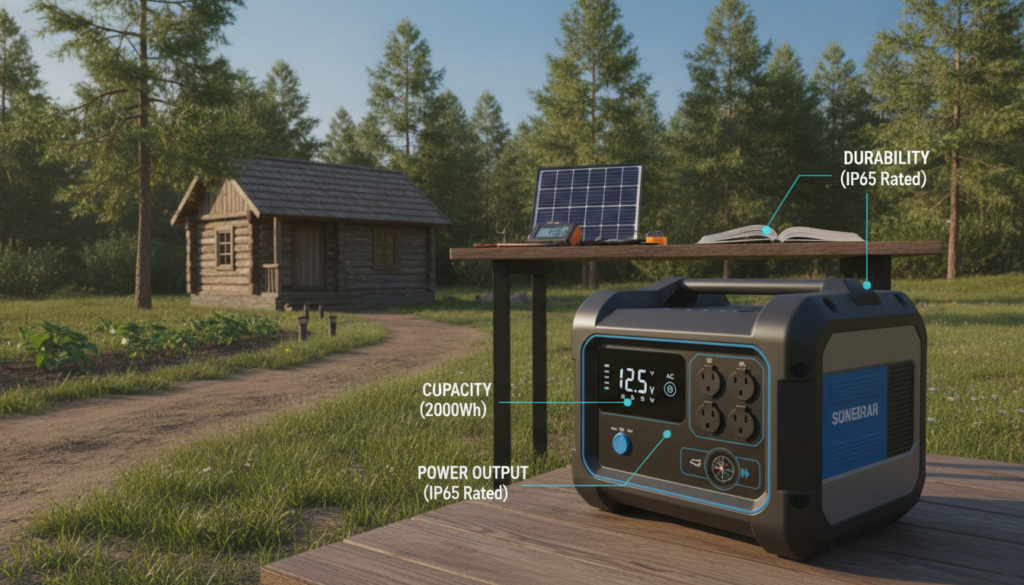
Conclusion
Choosing the right energy source can significantly enhance your quality of life and ensure reliable power. Evaluating your daily energy needs and battery capacity is crucial in selecting a system that aligns with your lifestyle and budget.
We have highlighted various options available in 2025, focusing on performance, safety, and the long-term benefits of using LFP battery technology. Remember, the right system is one that is properly sized for your home, allowing you to live comfortably every single day.
We encourage you to apply the knowledge from this guide to find the ideal energy solution that will support your journey toward energy independence.

